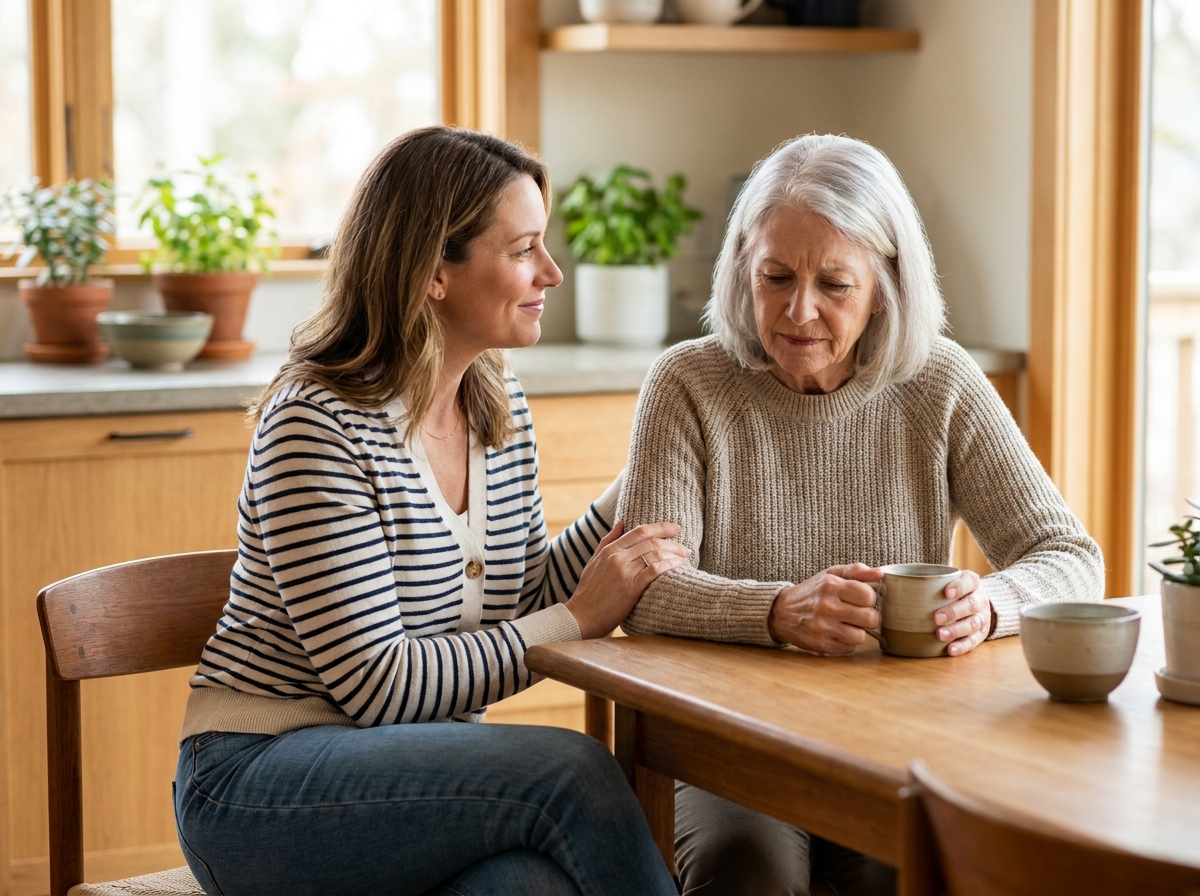
You notice Mom coughing every time she drinks her morning coffee. Dad pushes away his favorite Sunday roast. These moments hit hard when you realize that eating, what was once something so basic, has become risky.
What You Might Be Seeing
Has your loved one started:
- Coughing or choking while eating or drinking?
- Eating much slower than before?
- Avoiding foods they used to love?
- Losing weight without trying?
You're not imagining it. And you're not alone.
What's Really Happening
The medical term is "dysphagia" but let's call it trouble swallowing.
As we get older, our swallowing muscles weaken like other muscles do. Food that used to go down easily now sticks. Sometimes it goes the wrong way entirely into the lungs instead of the stomach. When this happens, it can cause coughing, irritation and pneumonia. What's worse is that when the trouble swallowing becomes silent and stealthy without any symptoms at all.
Some conditions make this worse faster. A stroke. Parkinson's disease. Even just the normal aging process.
Why This Matters So Much
Think about what food means in your family.
That morning coffee ritual. The way dad's face lights up at Sunday dinner. Mom's favorite tea in the afternoon. These aren't just about nutrition, they're about joy, connection, and part of the foundations of culture.
When swallowing becomes unsafe, families face difficult choices. Do we thicken water until it feels like honey? Turn that Sunday roast into baby food? The person you love might feel frustrated, sad, or embarrassed.
And there's the medical side too. Food going into the lungs carries the risk of pneumonia, hospital stays. Repeated infections lead to antibiotics that stop working. It's scary for everyone.
The Hard Conversations
Increasing swallowing difficulties often signal an overall general decline. The act of swallowing is a ballet of many muscles working together. Difficulty with the performance can be a sign the dancers are slipping, and a reflection of the body as a whole.
This frequently leads to a bigger discussion regarding what is important to person's quality of life. What would your loved one want? What matters most to them about eating and living?
There's no right answer. Some people choose to keep enjoying food they love, even knowing the risks. Others prefer the safety of modified textures.
Sometimes families need to consider feeding tubes. It sounds drastic, but there may be some scenarios where that might need to be considered. Tubes come with their own risks: infections, discomfort, and food can still end up in the lungs. The reality is most adults will have food go down the wrong tube, even when they are young and healthy, the difference being younger people are generally able to manage avoiding pneumonia by effectively clearing the food. Having conversations early is helpful in guiding these types of decisions.
How We Help You Through This
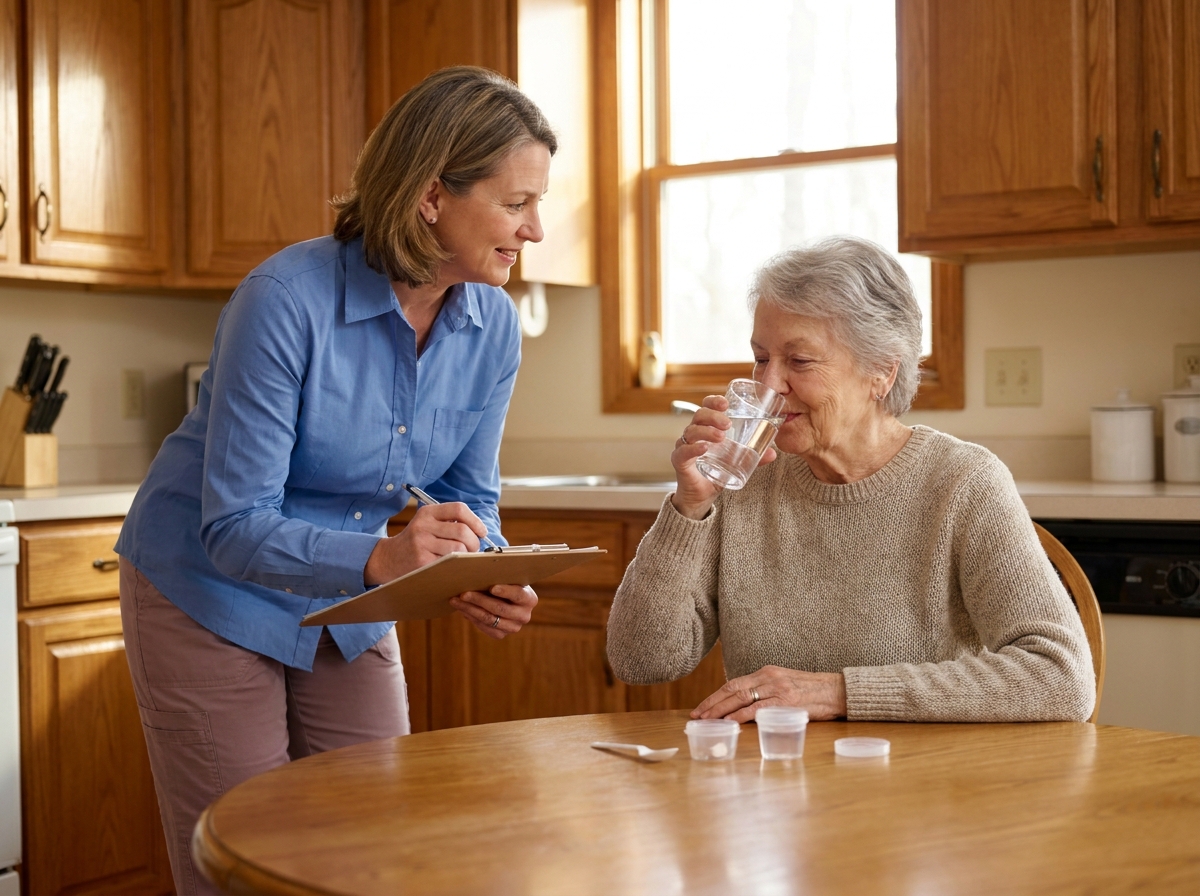
This is where Beyond Neighbours steps in. We've walked hundreds of families through these exact decisions.
We start simple: A swallowing assessment in your loved one's own home. No rushed hospital appointments or sterile offices.
We explain everything: What's happening, what the options are, and what each choice means for daily life.
We support your values: Whether that's prioritizing safety, preserving joy, or finding a balance between both.
We coordinate care: Working with speech therapists, dietitians, and specialists so you don't have to manage it all alone.
You're Not Facing This Alone

Watching someone you love struggle to eat is heartbreaking. Making decisions about feeding tubes or modified diets feels overwhelming.
What we've learned from years of these conversations: Families find their way through this decision when they have the right information, framework and support.
You don't have to become a medical expert overnight. You don't have to figure out the healthcare system on your own. And you definitely don't have to make these decisions without help.
We're here to preserve dignity, safety, and yes – even joy – around eating. Because everyone deserves to navigate this chapter with confidence and care.